
 We hardly ever think about our joints until they beckon to us through the sensation of pain or they swell up after a night of standing or dancing. Sometimes, we just notice that reaching up to wave or to style our tresses, or smooth a balding head while we think, is a bit uncomfortable.
 There are some things you need to know about the joints of the body. The names and types will surprise you!
“Ah feel I could run in town again, jump and shake the ground again…no place like home…”
I know you can sing the familiar lines of that popular soca sensation, and2 I’m sure you remember dancing to that song so many times, but did you ever think about how you were able to execute the dance so well? You can thank your joints for that. And some of them are begging for some TLC! Lets talk.
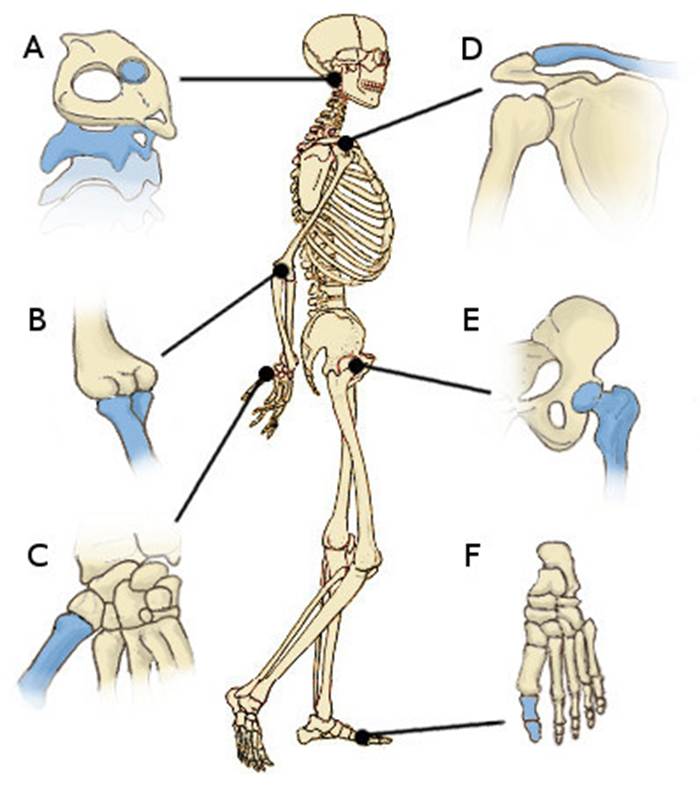
Beneath the fabulous skin and other things, is our skeletal structure. At birth, the bones have a limited potential for growth which is determined by by our genetics, in part. That is why some of us are in ‘small packages’ and others have difficulty finding jeans with a 34” inseam! Irrespective of the length, healthy bones they are designed to provide protection to the essential organs ( brain, heart and lungs) as well as to provide anchors for muscles. The contraction of the muscles allow us to ‘wave yuh flag’ and ‘Jump up, jump up’, no matter your height and mass. Here are a examples of the types of joints and where they are located.
By classification, there are 3 types of joints. Hinge…Ball and Socket…Saddle! No, I am not in a woodwork shop, I’m speaking about the wonderful designs of joints beneath your skin.
Some of these joints have a capsule (bag of fluid surrounding the joint) and the shoulder and knee joints are classic examples.
Every time you nod your head to a song, you are using your ‘Atlanto-Axial’ joint. This is a pivot joint. Give a ‘thumbs-up’, and joint at the base of your thumb, a ‘Saddle’ joint, gets some wear.
Swing your hips to the rhythm of ‘Take it Easy…’ and your ‘Ball and Socket’ hip joints get a workout.
Have an issue with your teeth, your ‘Temporomandibular’ joint’ will be stretched to the limit when your Dentist tilts that grey chair backwards and prepares to put the suction tube into your cheek!
When you hug someone, and you bend your elbows, you are activating a ‘Hinge’ joint.
A – Atlanto-Axial
B – Hinge Joint
C – Saddle joint
D – Plane joint
E – Ball and Socket
F – Condyl joints
Conclusion – So the next time you hear your favourite70’s dance song or that infectious Big Links rhythm of Young Breda, and you decide to move your feet…and your waist…and your arms, remember to thank your joints and to take care of them so that you will be able to dance at all your birthdays to come!
Next Spotlight on Strengthening. Eccentric or Concentric…that is the question!