
Period poverty is not simply about the lack of menstrual products. It is the absence of reliable access to affordable supplies, safe and private sanitation facilities, and the knowledge required to manage menstrual health with dignity. As of 2026, millions around the world continue to face this challenge, with far-reaching consequences for health, education, and economic participation.
Without proper WASH systems in place, managing menstruation becomes unsafe and stressful. Individuals may be forced to use improvised or unhygienic materials, increasing the risk of infections and discomfort. Just as critically, the absence of clean, private spaces with water and soap creates anxiety and stigma, often leading to missed school days or reduced participation in work and community life.
 The financial burden compounds the issue. Menstrual products are a recurring necessity, yet many families struggle to afford them. In Trinidad and Tobago, the average monthly cost is approximately TTD 150 per individual and about TTD 450 for a household with three menstruating members. Findings from the FeminiTT 2021 survey revealed that 51.5% of respondents considered menstrual products unaffordable. This underscores a critical reality: menstruation is not a choice, yet access to the resources required to manage it often is.
At its core, period poverty is a WASH issue. Adequate water supply, sanitation, and hygiene facilities are essential for safe menstrual management. Clean, private toilets equipped with running water, soap, and proper disposal systems are not luxuries- they are necessities. Facilities that allow for the washing and sun-drying of reusable materials are equally important, as sunlight acts as a natural disinfectant. Proper waste management also protects the environment and prevents damage to sanitation systems.
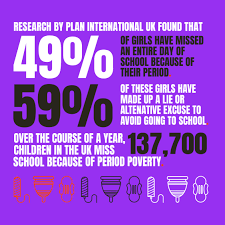 Addressing this challenge aligns directly with Rotary’s commitment to sustainable community development. Solutions must be comprehensive and collaborative:
- Strengthening WASH infrastructure: Ensuring that schools, workplaces, and public spaces are equipped with safe, private, and hygienic facilities.
- Improving access to menstrual products: Supporting initiatives that provide free or subsidised supplies, particularly in schools and vulnerable communities.
- Promoting education and awareness: Integrating menstrual health into broader hygiene education to reduce stigma and empower individuals with knowledge.
- Advocating for supportive policies: Encouraging systems that recognise menstrual health as a public health and human rights priority.
- Supporting sustainable practices: Promoting both disposable and reusable options, alongside guidance for safe use and care.
Civil society continues to play a vital role. Organisations such as the Helping Her Foundation have been at the forefront, distributing menstrual products and delivering hygiene education to schools and shelters since 2015. Yet, while these efforts are impactful, they cannot replace the need for systemic investment, policy reform, and sustained public commitment.
 As Rotarians reflect on the significance of WASH Month, there is an opportunity to broaden the conversation. Ensuring access to clean water, sanitation, and hygiene must include menstrual health. When these needs are met, the results are transformative: improved health outcomes, increased school attendance, greater workforce participation, and stronger, more equitable communities.
In advancing WASH initiatives, Rotary not only provides infrastructure- it restores dignity, unlocks opportunity, and changes lives.